🚨 My Friend Leqaa Kordia, a Palestinian, Is Slowly Dying in ICE Custody. She's Been There FOR A YEAR!
She spoke up for Palestine. The U.S. government broke her body in response.
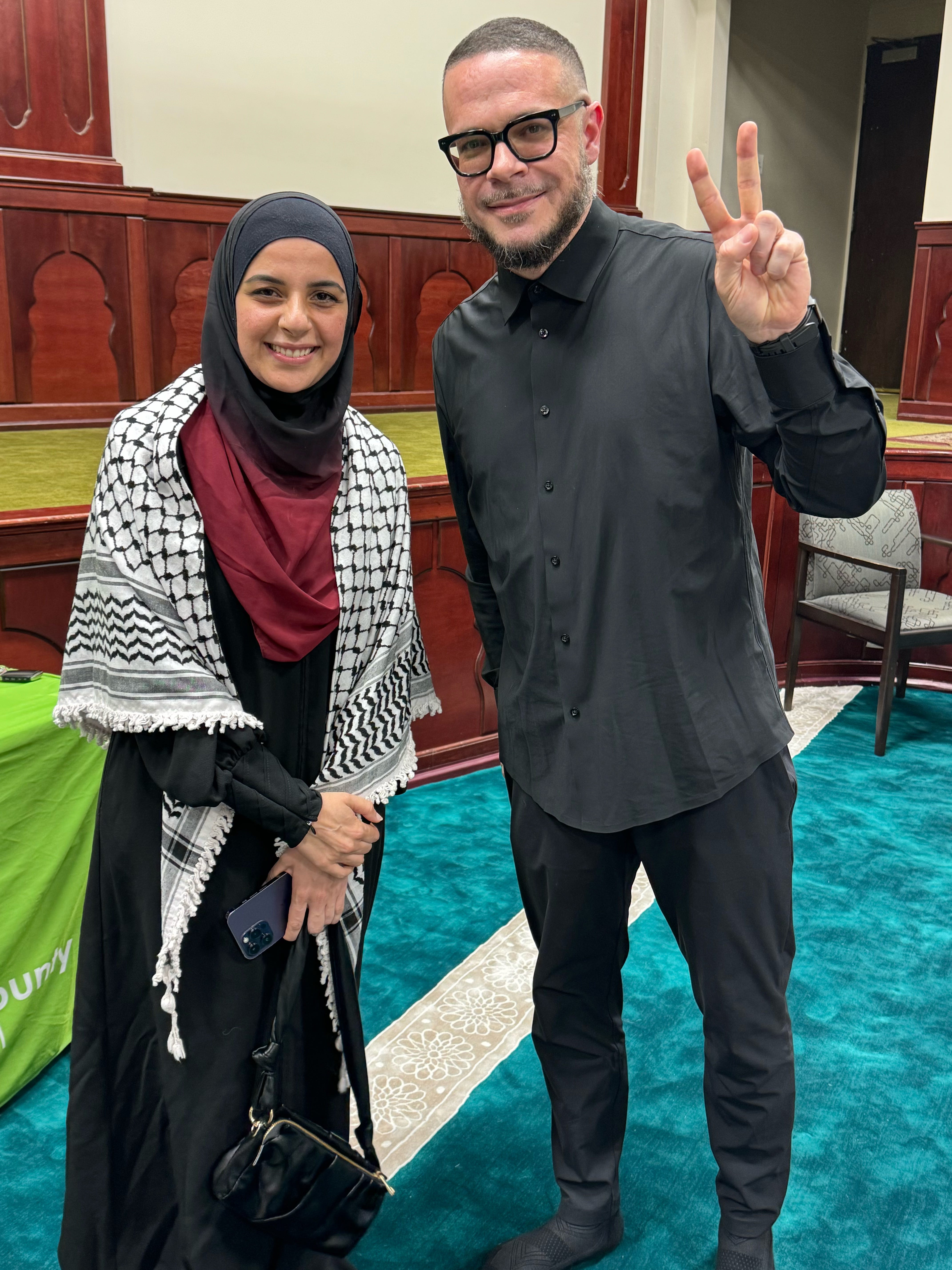
I want to tell you about my friend, Leqaa Kordia.
She is 33 years old. She is Palestinian. She is a devout Muslim. She is kind. She plays the oud. She makes pottery. She hikes. She is a daughter, a sister, and a caretaker to a younger brother with special needs. She has lived in the United States since 2016. And for nearly a year, the U.S. government has held her in an ICE detention center 1,500 miles from her home, while her body slowly broke down.
Last week, it finally did.
Leqaa collapsed in a bathroom at the Prairieland Detention Center in Alvarado, Texas. She hit her head. She suffered a seizure. She was rushed to a hospital. And then—like something out of a dictatorship—she disappeared.
Her family wasn’t told where she was.
Her lawyers weren’t told where she was.
They called 16 hospitals trying to find her.
For nearly a full day, the U.S. government said nothing.
This is not an accident.
This is not a bureaucratic glitch.
This is what state cruelty looks like when it no longer fears sunlight.
Leqaa has been in ICE custody since March 13, 2025, when she went—voluntarily—to ICE headquarters in Newark, New Jersey, for what she believed were routine immigration questions. Instead, as she wrote in her own words, “I was thrown into an unmarked van and sent 1,500 miles away.”
She did not run.
She did not resist.
She did not hide.
She trusted the system. And the system swallowed her.
Her arrest came after she participated in protests calling for a ceasefire and an end to Israel’s siege on Gaza near Columbia University in April 2024. The Department of Homeland Security has insisted this has “nothing to do with her radical activities” and everything to do with a visa issue.
But Leqaa tells the truth plainly:
“My arrest came after my participation in protests for a ceasefire and an end to Israel’s siege on Gaza… The Department of Homeland Security publicly stated that it had targeted me because of my advocacy for Palestinian rights.”
She wasn’t even a student. She just couldn’t stay silent.
“I am not a threat. I just spoke out for Palestinian rights.”
That line should haunt this country.
Leqaa is not some hardened political operative. She doesn’t even consider herself an activist.
“I am a devout Muslim who is deeply committed to my faith and community. I am a daughter, a sister and a best friend.”
She grew up Palestinian under Israeli military occupation. She remembers the smell of tear gas as a child. She remembers Israeli soldiers humiliating her father. She remembers waking up at nine years old with a rifle pointed at her head.
She spent part of her childhood in Gaza with her mother until the Israeli siege made travel impossible. She was separated from her mother for nearly twenty years before finally reuniting with her in the United States in 2016.
And now, in a cruel repetition of history, she has been forcibly cut off from her again—this time by the U.S. government.
“In a cruel twist of fate, I now find myself forcibly cut off from her once again.”
Leqaa’s legal situation is not murky. It is not unresolved. It is not dangerous.
An immigration judge has twice approved her release on bond.
A federal magistrate judge recommended her release.
The government has appealed—again and again—using rarely used procedural loopholes to keep her locked up.
Her own lawyers say the practice is now being challenged across the country, with courts increasingly finding it unconstitutional.
Still, the Trump administration keeps her confined.
Why?
Leqaa answers that too:
“Through my continued detention, the Trump administration aims to send a chilling message: People who speak out for Palestinian rights or criticize Israel will face retribution.”
That message is now written on her body.
Inside Prairieland, conditions are exactly what human rights groups have warned about for years: overcrowding, malnutrition, sleep deprivation, filth, cold, and medical neglect. Leqaa slept for months in what detainees call a “boat”—a plastic shell on the floor, surrounded by cockroaches, with only a thin blanket.
“Privacy does not exist here.”
As an observant Muslim woman, she has struggled to find a clean, quiet space to pray. She has been denied consistent access to halal food. The food made her vomit. She stopped eating it and relied on packaged commissary items.
She lost weight.
She grew weak.
She grew dizzy.
Her cousin saw her days before she collapsed.
“She was lifeless,” he said. “She told me she literally feels like she’s slowly dying.”
Four or five days later, she collapsed.
Two Texas lawmakers are now sounding the alarm. One called Prairieland “a black box.” Another said plainly what so many of us already know:
“The government is intentionally being cruel.”
And they’re right.
Leqaa has no family in Texas. Her family is in New Jersey and Gaza—where many of her relatives have already been killed by Israeli bombardment. And still, ICE fought to keep her locked up until her body finally gave out.
Her lawyer said it clearly:
“She should never have been detained. But today—almost one year later—she absolutely should be free, because now her health is at significant risk.”
I want to speak plainly now, as her friend.
What is happening to Leqaa Kordia is a gross and grave injustice. It is unconstitutional. It is immoral. And it is happening on American soil, in real time, while we argue about abstractions.
This is the same cruelty I wrote about recently—the same cruelty that forces people to wear passports around their necks, the same cruelty we have watched unfold against Palestinians for decades, now imported home and turned inward.
Leqaa herself made the connection:
“I think, too, of the thousands of Palestinians languishing in Israeli prisons, who are subject to beatings, torture and starvation.”
This is not coincidence. It is continuity.
And in Islam, this matters deeply.
The Prophet ﷺ warned us that oppression will be darkness upon darkness on the Day of Judgment. He taught us that helping the oppressed is not optional—and that when we see wrongdoing, we must stop it if we can.
Leqaa has done nothing wrong. She spoke for life. For dignity. For justice.
And for that, the U.S. government has imprisoned her, starved her, silenced her, and now endangered her life.
This is not who we are supposed to be.
Leqaa marked her 33rd birthday in detention. She dreams of freedom. Of returning to her mother’s embrace. Of caring for her younger brother. Of living.
“But this story is much bigger than me,” she wrote. “It is about the struggle for the liberation of all Palestinians and those who speak up for a freer and more just world… it is a struggle for the soul of America.”
She’s right.
And the soul of this country is failing a quiet, gentle, brave woman who trusted it.
Leqaa should be home.
Leqaa should be free.
Leqaa should be alive and healthy—not hidden in an undisclosed hospital while her family calls hospital after hospital in despair.
History will judge how we responded.
So will Allah.
Love and appreciate each of you.
Your friend and brother,
Shaun


I am absolutely desperate to get her free.
Please keep us posted and if there is a petition set up to call for her release please let us know.