

For decades, the United States has treated its military bases across the Middle East like untouchable platforms of power. Not just bases. Symbols. Warnings. Permanent reminders that America could strike anywhere, anytime, while remaining largely beyond reach.
But the satellite images are now telling a very different story.
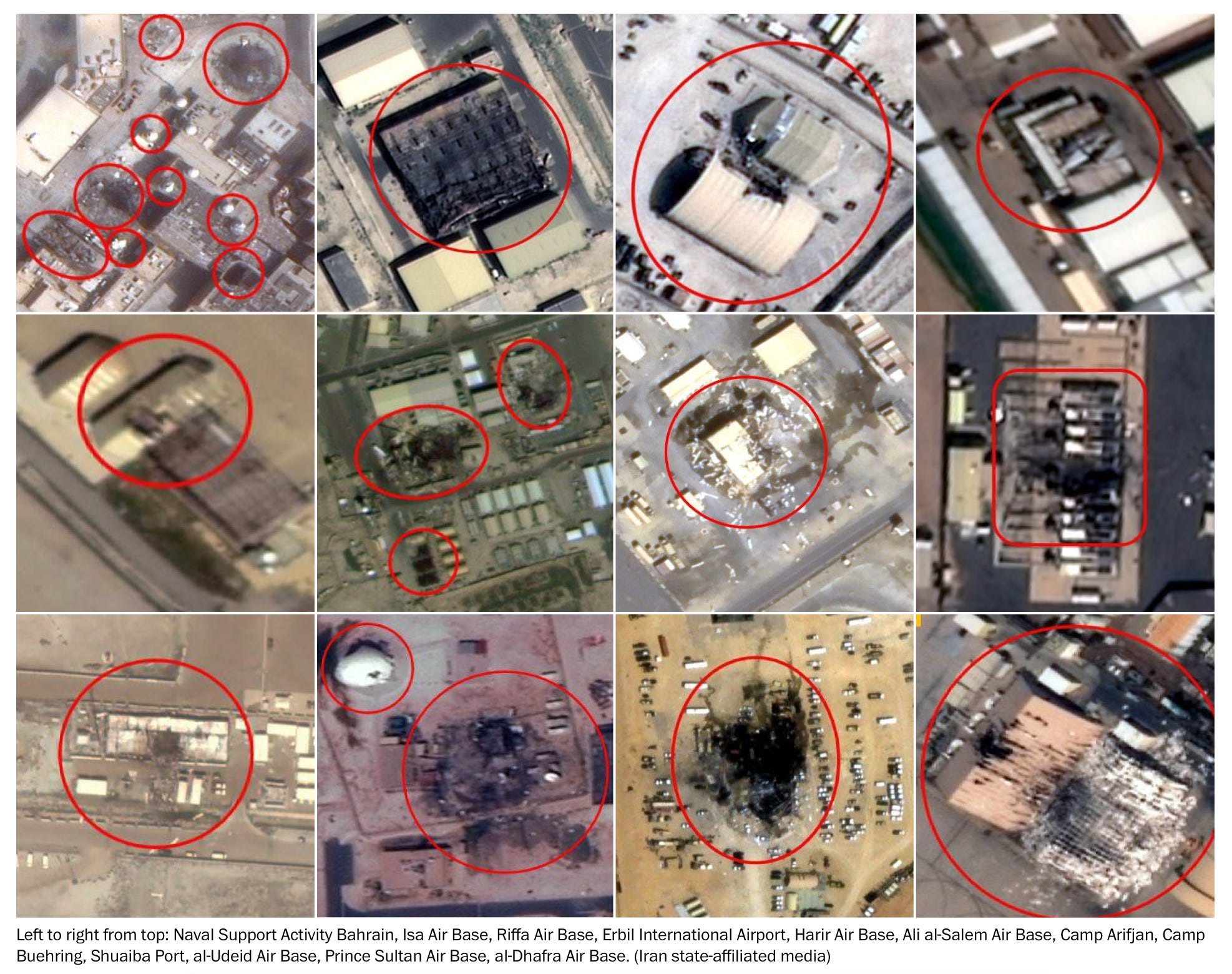
According to a new investigation by The Washington Post, Iranian airstrikes have damaged or destroyed at least 228 structures or pieces of equipment at 15 U.S. military sites across the Middle East since the U.S.-Israel war with Iran began on February 28th. The Post says the damage includes hangars, barracks, fuel depots, aircraft, radar, communications, and air defense equipment — far more destruction than the U.S. government has publicly acknowledged.
Before I go further, let me say this clearly. The North Star exists for moments like this. When the government, the military, and much of the media give the public a soft, sanitized version of reality, we have to tell the truth plainly, with receipts. We keep as much of this work free as possible because readers all over the world cannot afford another paywall between them and the truth. Those who can afford to support this work make that possible for everybody else. If that’s you, click here to become a member, or click here to join as a monthly, annual, or founding member.
Now let’s talk about what this really means.
Because I do not think most Americans understand the scale of what has just been revealed.
This may be the most geographically widespread direct damage to U.S. military infrastructure by a state adversary in modern American history.
I am not saying this is Pearl Harbor. Pearl Harbor was catastrophic in human loss and concentrated military destruction. According to the National Archives, the United States suffered 3,435 casualties and lost or sustained severe damage to 188 planes, eight battleships, three light cruisers, and four miscellaneous vessels in the Japanese attack on Hawaii on December 7th, 1941.
But Pearl Harbor was one place.
One harbor.
One morning.
What The Washington Post has now documented is something altogether different: a state adversary damaging U.S. military infrastructure across an entire region. Bahrain. Kuwait. Qatar. Saudi Arabia. Jordan. The United Arab Emirates. Multiple bases. Multiple categories of targets. Multiple forms of military infrastructure.
That is the point.
Iran did not merely “respond.” Iran demonstrated that the U.S. military footprint across the Middle East is not some invisible, invincible architecture of empire.
It is a map of fixed targets.
The Damage Was Not Random
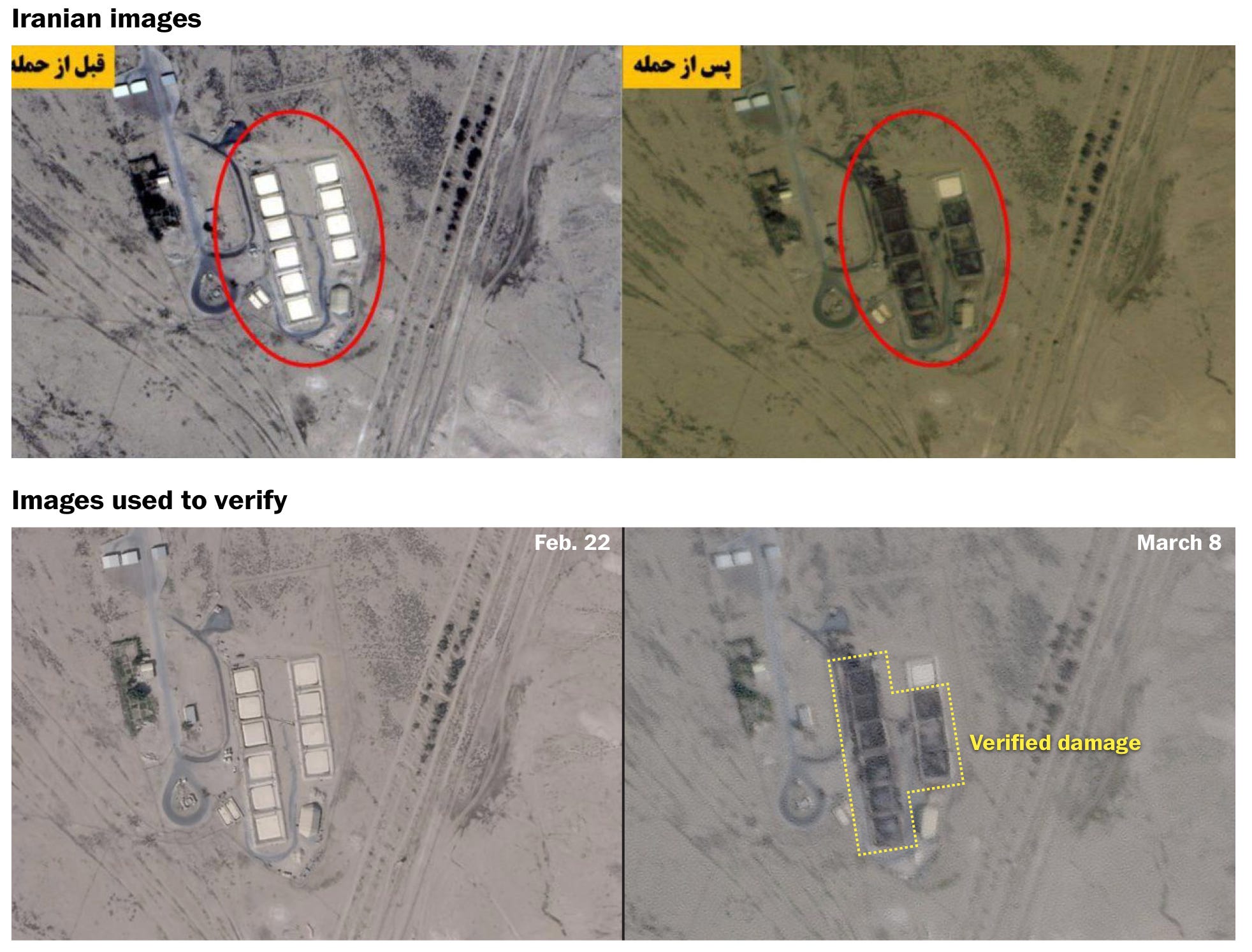
The Post says it reviewed more than 100 high-resolution satellite images released by Iranian state-affiliated media, then verified 109 of those images against lower-resolution imagery from the European Union’s Copernicus satellite system and high-resolution Planet imagery where available. The Post says it excluded images when comparisons were inconclusive, found no Iranian imagery it reviewed to have been manipulated, and separately found 10 damaged or destroyed structures not documented in the Iranian imagery.
That matters because the obvious response from the U.S. government and its defenders will be to say, “Well, Iran said it, so we can ignore it.”
No.
The whole point of the Post investigation is that the images were checked.
And the damage was not just symbolic.
The Post found that Iranian attacks hit a satellite communications site at al-Udeid Air Base in Qatar, Patriot missile defense equipment at bases in Bahrain and Kuwait, THAAD-related radar and equipment in Jordan and the United Arab Emirates, a satellite dish at Naval Support Activity Bahrain, a power plant at Camp Buehring in Kuwait, and five fuel storage bladder sites across three bases.
The Post also reported that more than half of the damage it reviewed occurred at the U.S. 5th Fleet headquarters in Bahrain and three bases in Kuwait — Ali al-Salem Air Base, Camp Arifjan, and Camp Buehring. It identified damage or destruction involving radomes, fuel storage, command-and-control infrastructure, air defense systems, satellite communications, and an E-3 Sentry command-and-control aircraft at Prince Sultan Air Base in Saudi Arabia.
That is not a scratch on the paint.
That is the physical architecture of U.S. military power being hit across the region.
The Post quoted Mark Cancian, a retired Marine Corps colonel and senior adviser at the Center for Strategic and International Studies, saying, “The Iranian attacks were precise.” He added that there were no random craters indicating misses.
That one sentence should stop everybody cold.
For years, American officials and television generals have spoken about Iran like it is both an existential threat and a fragile, backward state that can be easily dominated. They cannot have it both ways. Either Iran is so dangerous that America must reorder the entire Middle East around it, or Iran is so weak that the U.S. can bomb it into submission without serious consequences.
What the satellite images show is that the Trump administration badly underestimated Iran’s capacity to hit back.
The Human Cost Was Hidden in Plain Sight
The Post reported that seven U.S. service members have died in strikes on U.S. facilities in the region since the war began — six in Kuwait and one in Saudi Arabia — and that more than 400 troops had suffered injuries by late April. At least 12 of those injuries were classified by military officials as serious, but I have seen countless reports that the numbers of American soldiers killed and injured is FAR HIGHER. I believe this.
This is a familiar pattern.
In 2020, after Iran struck al-Asad Air Base in Iraq in response to the U.S. assassination of Qassem Soleimani, the Trump administration initially downplayed the injuries and lied about the numbers. Later, the U.S. Army reported that 110 service members had been diagnosed with traumatic brain injuries from that attack.
We have seen this before.
First, the government says nobody was seriously hurt.
Then the number grows.
Then the story quietly changes.
Then the public is expected to move on.
But traumatic brain injuries are not “headaches.” Shrapnel wounds are not abstractions. Dead soldiers do not become less dead because the administration wants better headlines.
And this time, the casualties are only part of the story.
Because the damage to the bases themselves appears to have forced real operational changes.
The Post reported that commanders moved most personnel from some sites out of the range of Iranian fire early in the war, and that damage at Naval Support Activity Bahrain was described by a U.S. official as “extensive.” That same official said the headquarters there relocated to MacDill Air Force Base in Tampa, Florida, and that troops, contractors, and civilian employees are unlikely to return anytime soon. Two other officials told the Post that U.S. forces may never return to regional bases in large numbers, though no final decision had been made.
Please understand what that means.
This is not just damage.
This is forced adaptation.
The empire is being made to move.
The Cost Is Already Staggering
Reuters reported that a senior Pentagon official told lawmakers the war has cost $25 billion so far, mostly for munitions. But Reuters also reported that the official did not detail whether that number included projected costs for rebuilding and repairing base infrastructure in the Middle East damaged during the conflict. Some experts are saying the damage alone is over $100 billion to American bases and equipment.
That matters.
Because the official price tag is already enormous — and it may not include the full repair bill.
Al Jazeera reported that CSIS calculated U.S. aerial equipment losses between $2.3 billion and $2.8 billion, and that the estimate does not include losses incurred at U.S. bases in the region, specialized equipment, or naval assets.
Al Jazeera also reported, in a separate cost analysis, that NBC quoted six U.S. officials saying Iran damaged U.S. bases and equipment in the Middle East far worse than publicly acknowledged, with repairs alone potentially costing billions of dollars. That same Al Jazeera report cited a New York Times estimate that repairs to the U.S. Navy’s Fifth Fleet headquarters in Bahrain could cost $200 million by itself.
And even the Pentagon does not appear to have a final number. Al Jazeera reported that acting Pentagon comptroller Bryn Woollacott MacDonnell Hurst told reporters the department did not “have a final number” for damage to overseas installations and was still assessing what it wanted to construct in the future.
America’s Bases Became Liabilities
For a long time, U.S. bases across the Middle East functioned as launchpads for American power. They allowed Washington to bomb, surveil, threaten, sanction, blockade, and occupy from a distance. They were sold to the public as necessary for “stability,” which is often empire’s favorite word for domination.
But those same bases have now become liabilities.
A CSIS report warned that the United States heavily used seven key munitions during the 39-day air and missile campaign before the ceasefire, and that for several of those munitions, inventory levels have become a serious concern. CSIS described THAAD interceptors as especially critical because of low inventory and limited alternatives, and warned that damaged or lost THAAD radars could create a capability gap that takes time to replace.
That is one of the most important details in this entire story.
Because this war was not only expensive in damaged buildings and destroyed equipment. It burned through the very systems America relies on to fight future wars.
Responsible Statecraft, summarizing the CSIS report, noted that the U.S. fired at least 45% of its critical Patriot missile interceptors and more than 53% of its THAAD interceptors during the war. At the high end, it said CSIS estimated the U.S. may have used more than 80% of its THAAD interceptors.
In other words, Iran did not have to destroy the U.S. military to expose it.
It had to make America spend wildly to defend exposed bases, absorb damage across the region, deplete critical weapons, and then pretend everything was fine.
That is not victory.
That is vulnerability.
The Nuclear Argument Is Falling Apart
Now comes the other devastating part.
The stated purpose of this war was to stop Iran’s nuclear program.
But Reuters reported that U.S. intelligence assessments indicate the time Iran would need to build a nuclear weapon has not changed since last summer, when analysts estimated that earlier U.S.-Israeli attacks had pushed the timeline to up to a year. Reuters said the assessments remain broadly unchanged even after two months of war.
Sit with that.
The United States and Israel launched this war in part by telling the public it was necessary to stop Iran from acquiring nuclear weapons. Iran hit U.S. bases across the region. The U.S. spent at least $25 billion. Troops were killed and wounded. Critical munitions were depleted. Bases were damaged. Global energy markets were disrupted.
And according to Reuters, the core intelligence assessment of Iran’s nuclear timeline may be basically where it was before this latest round of war.
That does not mean Iran’s nuclear program was untouched. It does not mean the conflict had no impact. Reuters reported that Israel has hit significant nuclear facilities and that earlier strikes had damaged or destroyed known enrichment plants. It also reported that U.S. officials argue the campaign damaged Iran’s conventional military capabilities and defense industrial base.
But the central promise was larger than that.
The public was told this war was necessary to stop Iran’s nuclear program.
And now the evidence suggests that promise may have been wildly oversold.
Reuters reported that the International Atomic Energy Agency has been unable to verify the whereabouts of about 440 kilograms of uranium enriched to 60%, and that the IAEA assesses the total highly enriched uranium stockpile would be enough for 10 bombs if further enriched. Iran has repeatedly denied seeking nuclear weapons, and Reuters noted that U.S. intelligence agencies and the IAEA say Tehran halted a warhead development effort in 2003, though some experts and Israel argue it secretly preserved parts of the program.
This is exactly why the public deserves evidence instead of slogans.
War is sold in certainty.
The aftermath is usually written in caveats and excuses.
The Blockade Is Not the Victory They Claimed
The Trump administration has also sold the blockade as a sign of American control.
But even that story is more complicated than the public has been told.
According to a new Washington Post investigation, since the U.S. imposed its naval blockade on Iran in April, at least 13 tankers have offloaded Iranian oil through covert ship-to-ship transfers near Indonesia’s Riau Archipelago. The Post estimated those transfers included roughly 22 million barrels of Iranian oil worth more than $2 billion.
So yes, the blockade may be hurting Iran.
But no, it has not cleanly shut Iran down.
And the U.S. government knows it.
A separate Washington Post report says a confidential CIA assessment concluded that Iran can survive the U.S. blockade for 90 to 120 days, possibly longer, before facing severe economic hardship. The same report says Iran still retains about 75% of its prewar mobile launchers and about 70% of its prewar missile stockpile, directly undercutting Trump’s public claim that Iran’s missiles were “mostly decimated.”
That is not a small contradiction.
That is the difference between a political talking point and an intelligence assessment.
And even while officials talk about ceasefire and diplomacy, the blockade itself remains a live military operation. CENTCOM said that on May 6th, U.S. forces disabled an Iranian-flagged oil tanker in the Gulf of Oman after it attempted to sail toward an Iranian port in violation of blockade measures.
So let’s be clear.
This is not peace.
This is a paused shooting war wrapped around economic warfare, naval pressure, fragile negotiations, and the constant threat of renewed bombing.
Washington Is Looking for an Exit Ramp
And that brings us to the current moment.
Reuters reported today that the United States and Iran are edging toward a temporary agreement to halt the war, with Tehran reviewing a proposal that would stop the fighting while leaving the most contested issues unresolved. Reuters says the emerging plan centers on a short-term memorandum aimed at formally ending the war, resolving the Strait of Hormuz crisis, and launching a 30-day window for broader negotiations.
That is not the posture of a government that simply got everything it wanted.
That is the posture of a government searching for a way out after discovering the road ahead is more dangerous than advertised.
Reuters reported that the proposed memorandum does not appear to include several long-standing U.S. demands Iran has rejected, including limits on Iran’s missile program and an end to its support for proxy militias. It also said the sources made no mention of Iran’s existing stockpile of more than 400 kilograms of near-weapons-grade uranium.
In plain English, the U.S. appears to be trying to stop the war now and leave the hardest issues for later.
That is not triumph.
That is damage control.
The Cover Story Is Collapsing
The public story was simple: America hit Iran hard. Iran was weakened. The U.S. absorbed limited retaliation. Trump projected strength. The Pentagon kept control. The bases held. The mission worked.
But the receipts now tell a different story.
The satellite images show widespread damage across U.S. military infrastructure.
The casualty numbers show dead and wounded Americans.
The cost reports show billions already spent and billions more likely coming.
The munitions reports show depleted missile-defense stockpiles.
The nuclear reporting shows limited new damage to Iran’s core nuclear timeline.
The blockade reporting shows Iranian oil still moving and U.S. naval operations still active.
The CIA reporting shows Iran may be able to endure the blockade for months and still retain most of its missile force.
And the diplomatic reporting shows Washington trying to negotiate a short-term way out.
That is the story.
Not one headline.
Not one paragraph.
The whole picture.
The U.S. government wants the public to believe it can wage war across the Middle East without consequences. It wants Americans to think bases overseas are just dots on a map, not buildings full of human beings, fuel, aircraft, radar, communications gear, missile defense systems, barracks, warehouses, and vulnerabilities.
And mainstream coverage too often helps maintain that illusion.
When America bombs, it is “targeting.”
When America is hit, it is “retaliation.”
When U.S. officials hide the damage, it is “operational security.”
When Iran releases images, we are told to be skeptical — and we should be skeptical — but somehow the same skepticism is rarely applied to the Pentagon’s carefully controlled narrative.
The truth is simpler and more dangerous.
The United States and Israel launched a war on Iran. Iran hit back. And now satellite imagery, intelligence reporting, military-cost reporting, and diplomatic reporting all point in the same direction: Iran made a much larger impact than the American media and the American public truly understood.
And I need us to sit with that.
This is not about cheering for war. But I also refuse to lie about power.
The United States built a military footprint across the Middle East that has brought misery to millions. Iraqis know it. Afghans know it. Palestinians know it. Yemenis know it. Syrians know it. Lebanese families know it. Iranians know it. Entire generations have lived under the sound of drones, sanctions, occupations, assassinations, airstrikes, and threats.
Now the American people are seeing, maybe for the first time in this war, that the machinery of empire is not invincible.
It is expensive.
It is exposed.
It is fragile.
And when it breaks, the same officials who told us the war would be clean, controlled, and decisive will ask working people to pay the bill.
That is always how this works.
They manufacture consent.
They hide the cost.
They minimize the damage.
They bury the wounded in fine print.
Then they call the next escalation “necessary.”
No.
Not this time.
The satellite images are the receipt.
The deaths are the receipt.
The billions in equipment losses are the receipt.
The $25 billion official price tag is the receipt.
The relocation from Bahrain to Tampa is the receipt.
The depleted missile stockpiles are the receipt.
The unchanged nuclear timeline is the receipt.
The still-moving Iranian oil is the receipt.
The negotiations are the receipt.
And the receipt says something very different from what the government has been selling.
It says America’s bases across the Middle East are not untouchable.
They are targets.
And every politician who pushed this war, excused this war, funded this war, or lied about this war owes the American people — and the people of the region — the truth.
Not spin.
Not flag pins.
Not tough-guy speeches.
The truth.
Love and appreciate each of you.
Your friend and brother,
Shaun

Don’t Stop Here
If this reporting matters to you, please help us keep doing it. Our work is independent because readers make it independent. If you can afford to support it, click here to become a member, or click here to join as a monthly, annual, or founding member. Your support helps keep this work free for readers around the world who need the truth but cannot afford another subscription.
Forward this to 3 people who need to understand what this war is really costing.
Trump absolutely did not want the world to know this happened. Iran basically destroyed every single major base and presence in the entire region. If the base wasn't destroyed, essential equipment was.
thanks for an interesting piece. it is typical to report only injuries and deaths of u.s. personnel and not iraqui casualties. as if some lives are more valuable than others which are not worth a mention. i hope this will shift.